The impending Super El Niño in Chicago is predicted to spur warmer-than-normal temperatures this winter—but that doesn’t mean snow is off the table.
Historical data from the National Weather Service shows a range of local snowfall outcomes during strong El Niño winters.
Here’s a breakdown of the numbers and Chicago what snowfall totals could look like this coming winter.
El Niño and snowfall in Chicago: a complicated history
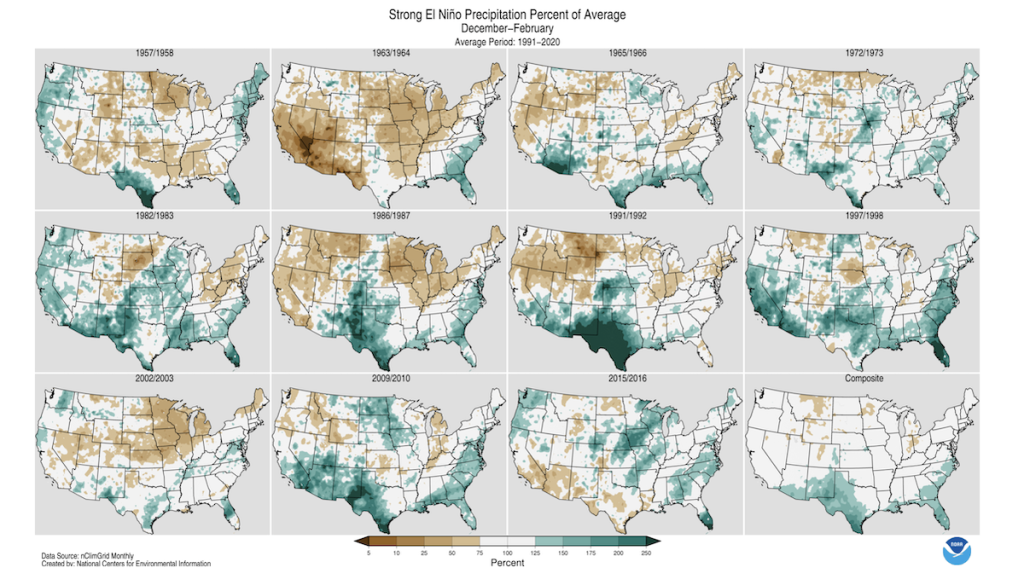
Recently released predictions from the National Oceanic and Atmospheric Administration (NOAA) show that the 2026-27 winter season in Chicago usher in a historic-strength El Niño event.
In case you need a refresher, El Niño is a phenomenon during which warm ocean surface temperatures in the Pacific ocean affect weather patterns in North America.
During El Niño periods, Chicago and the greater Midwest typically see warmer and drier conditions, while southern states see wetter conditions.

Winter temperature averages from the National Weather Service (NWS) show that some of Chicago’s strongest historical El Niño years to date have coincided with warmer-than-average temperatures.
Chicago’s mean seasonal winter temperature is around 28.1 degrees, according to the NWS. The following years saw strong El Niño patterns and elevated seasonal average temps:
- 2015 – 2016 – 31.3-degree average
- 1997 – 1998 – 33.2-degree average
- 1982 – 1983 – 30.9-degree average
Similarly, the strongest historical El Niños in Chicago have occurred in tandem with lower-than-normal snowfall totals, with 38.4 being the average:
- 2015 – 2016 – 31.2 inches
- 1997 – 1998 – 29.6 inches
- 1982 – 1983 – 26.6 inches
So that must mean winter 2026-27 will bring less snowfall in Chicago right? Not exactly.
While the data shows a correlation between strong El Niños and less snowfall, that doesn’t mean less snowfall is guaranteed.
Some long range models like the Old Farmer’s Almanac have predicted Chicago could still see a notably “cold, snowy” winter in 2026.
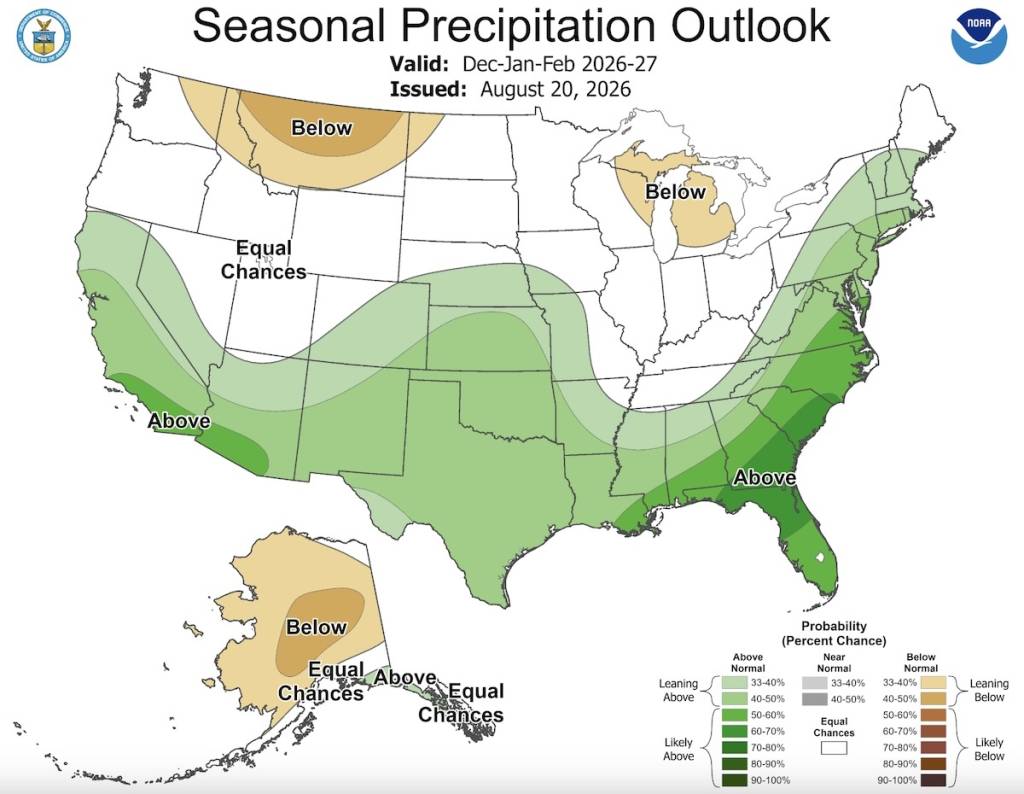
Conversely, NOAA’s long-range predictions show an equal chance of above or below average snowfall this winter.
So without an exact consensus, you’ll want to make sure you keep a snow shovel and some rock salt handy heading into the winter months.