Chicago recently ranked among the rattiest cities in America for 2026—but an ongoing effort to combat the local rodent problem is showing promising signs.
Recently released data shows a rat birth control pilot program launched in Wicker Park/Bucktown in 2025 correlated with a significant drop in rat activity in its first year.
Here’s a look at the statistics and what it means for Chicago’s status as rat city U.S.A.
Rat birth control: how it works

The Wicker Park Bucktown Chamber of Commerce (WPBCC) teamed up with Arizona-based biotech company SenesTech in 2025 to implement its non-lethal rodent birth control called “Evolve.”
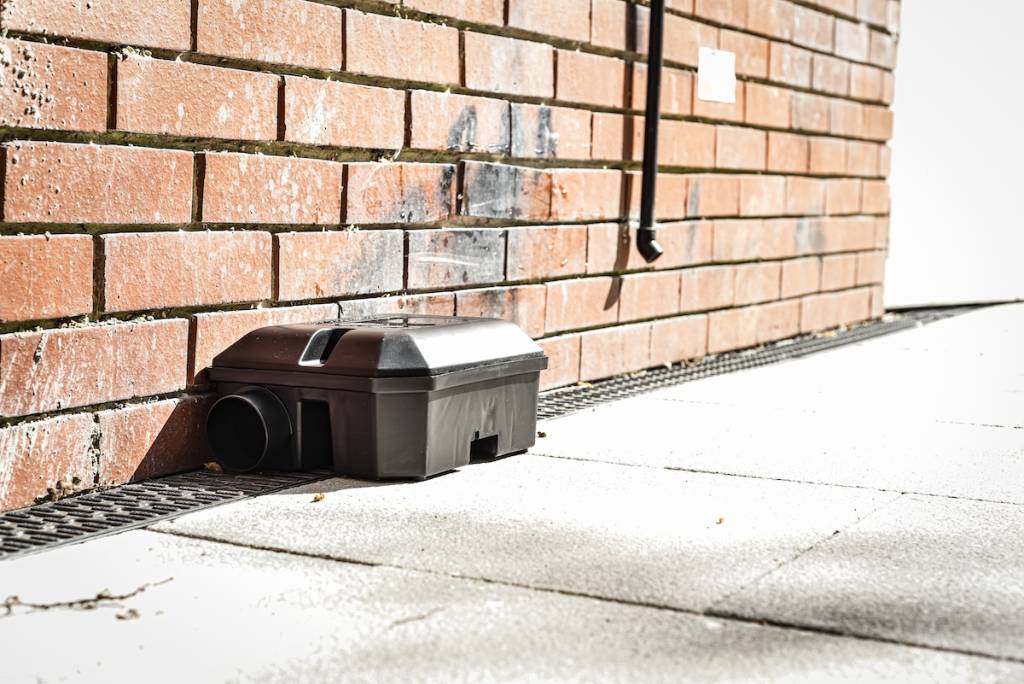
The WPBCC placed 190 boxes containing the rodent bait throughout two miles of the neighborhood’s Special Service Area #33 (SSA #33) tax district.
The SSA #33 includes major business corridors including Damen Avenue, North Avenue, and Milwaukee Avenue.
According to SenesTech’s site, Evolve “addresses the Root Cause of rodent problems” by targeting rapid reproduction.
Unlike rat poison, the bait works by curtailing breeding, making it an eco-friendly alternative to rodenticides which can threaten other wildlife, house pets, and the environment.
Wicker Park/Bucktown sees 88% reduction in rodent activity in first year of rat birth control program

Recent figures from SenesTech show promising results for the first year of the Wicker Park/Bucktown pilot program.
SenesTech documented an 88% local reduction in “average rat activity intensity” between August 2025 and July 2026 within SSA #33.
The company also saw an 82% drop in monitoring locations with detectable rat traffic.
SenesTech detected rat activity at 74% of monitoring locations during its first test in August of 2025. By July 2026, that figure had dropped to only 13% of locations.
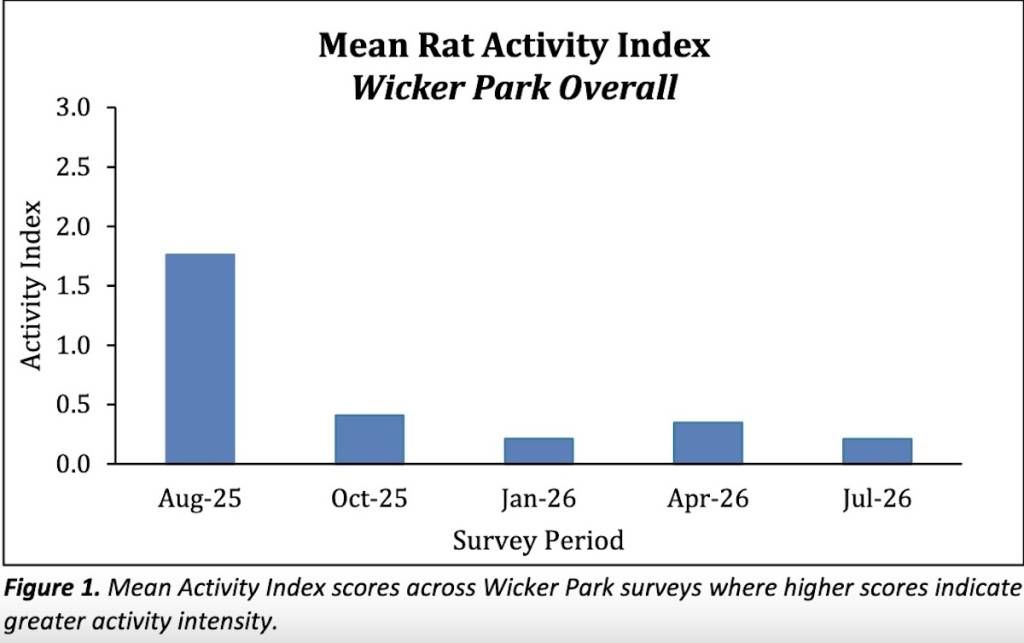
According to the study, rat activity can increase during the summer months due to rising temperatures. Despite this, SenesTech documented a substantial decline in rodent activity this summer.
August 2025 and July 2026 had similar average weekly temperatures in the mid to upper 70s, yet rat activity showed a steep decline in July 2026.
Other signs of improvement include a 36% reduction in 311 calls regarding rat infestations within Wicker Park since the beginning of the program. Additionally, citywide rat control calls increased by less than 1% during the same period.
Local officials champion rat birth control program, look towards expansion
SenesTech has championed the pilot program as a success.
“Across the 12-month monitoring period, rat activity became both less intense and less widespread across the Wicker Park deployment area,” wrote SenesTech in its findings.
“The sustained decline in tracking-tunnel activity, continued low activity under comparable warm-weather conditions, and reduction in local rodent-related 311 calls provide multiple measures of improvement during the Evolve program.”

Wicker Park community leaders have also celebrated the reductions correlated with the program.
“Our goal has always been to make Wicker Park cleaner, safer, and more enjoyable for
everyone who lives, works, and visits here,” said Alice Howe, Program Director of SSA #33.
“Evolve gave us a long-term tool that aligns with that vision by helping us manage rodent
populations while protecting the public spaces our community invests in.”
Since its launch in 2025, the Evolve program has doubled in size, due to a growing demand for bait boxes from residents and local businesses.
The program has expanded to other neighboring communities including Old Town SSA #48 and Albany Park SSA #60.