Mayor Brandon Johnson introduced the $17.6 billion Fair Share Budget proposal for fiscal year 2027 (FY2027) on Wednesday, October 21 before Chicago City Council.
The proposal targets Chicago’s $882.4 million budget shortfall without relying on city staffing layoffs or public service cuts.
The proposal builds on existing revenue streams and establishes new funding sources for infrastructure repair, public libraries, violence reduction, and other city services.
Here are some of the key takeaways.
FY2027 budget reintroduces corporate head tax

The FY2027 Fair Share Budget proposes reintroducing a corporate head tax in Chicago.
The Equitable Employer Tax (EET) would require corporations with 125 employees or more to pay $25 per month for each Chicago-based employee.
If approved, the EET would be Chicago’s first corporate head tax in over a decade.
An attempt to incorporate a head tax in the FY2026 budget was struck down by City Council in 2025, according to Illinois Policy.
A head tax was previously in effect in Chicago from 1973 until 2014, according to city records and the Civic Federation.
The tax was eliminated under Mayor Rahm Emanuel after city hall opted to phase it out in a 2011 vote.

Critics of corporate head taxes argue the measure slows job growth and dissuades corporations from investing in local hiring initiatives.
Emanuel called the head tax a “job killer” in a 2011 statement.
The city projects the tax will spur $101.8 million in revenue, which it intends to invest in “neighborhoods, people, and long-term financial health.”
Personal Property Lease Transaction Tax increase

The FY2027 budget puts forth increasing Chicago’s existing Personal Property Lease Transaction Tax (PPLT) from 15% to 20%, generating an additional $234 million in total revenue.
The PPLT imposes a tax on leasing items, including car rentals, cloud computing services, and office equipment.
The city calls the tax a “sustainable, structural revenue” source, having surpassed projections by $23 million through August 2026.
The budget proposal includes an exception to the tax increase for car leases, which will remain at a flat rate of 15%.
Corporations account for a significant share of the tax, with 100 of Chicago’s largest businesses making up more than half of the total tax revenue in 2025.
New tax on package waste
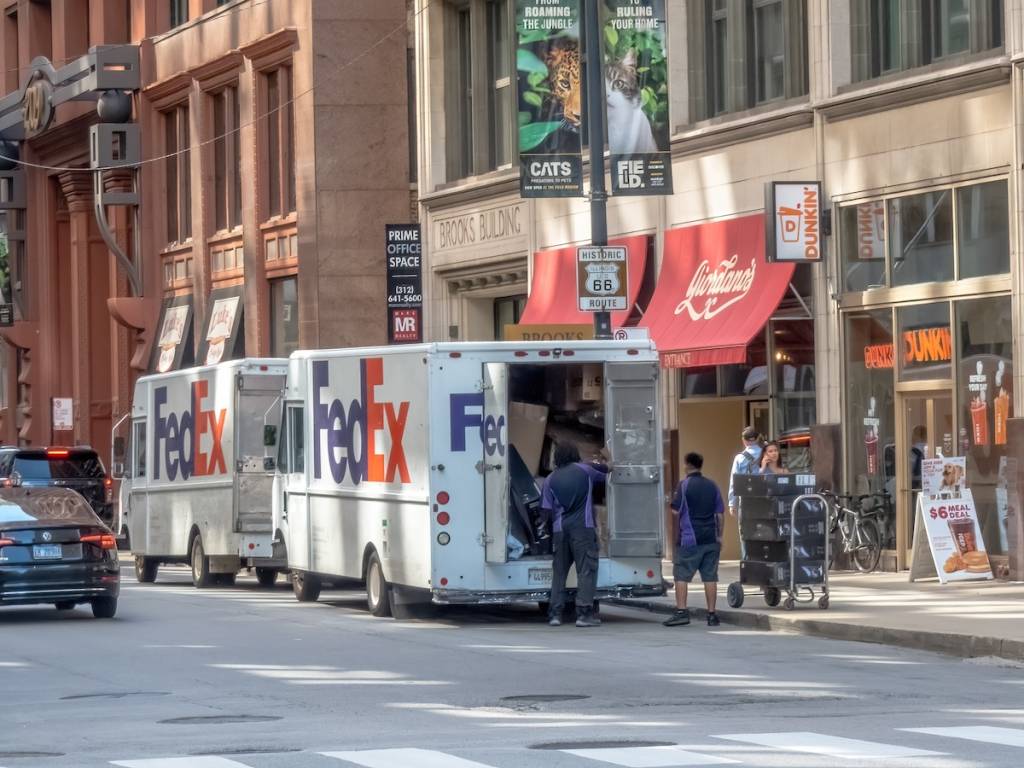
The FY2027 budget proposal includes a new Packaging Waste Tax of $0.15 on individual non-medical and non-food containers or packages.
The budget proposal notes that packaging is the largest type of waste in the U.S., making up nearly 29% of discarded materials processed by American cities.
The new package tax is designed to emulate Chicago’s existing checkout bag tax. The bag tax has proved successful in positively changing consumer behavior and reducing plastic waste.
Increased taxes on sports betting

The FY2027 budget plan also proposes increasing Chicago’s existing Sports Wagering Tax from 10.25% to 20%.
The tax impacts adjusted gross revenue generated by sports betting businesses in the city, targeting businesses themselves rather than individual bettors.
This increase would produce an estimated $37 million in additional revenue.
Smart Streets expansion

Chicago will expand its Smart Streets program under the FY2027 budget.
The initiative, first implemented in 2024, utilizes cameras mounted on city buses and vehicles to issue traffic tickets for drivers who block protected bike and bus lanes.
Smart Streets was initially rolled out as a pilot program in select wards. Under the proposed budget, the program will expand to all city wards by the end of 2028.
Budget timeline
The proposed Fair Share Budget is now under review by the Committee on Budget and Government Operations, according to the Chicago budget calendar.
Chicago City Council must vote on the bill by December 31, 2026. The budget will go into effect on January 1, 2027.
Click here to view the full proposal and learn more.