
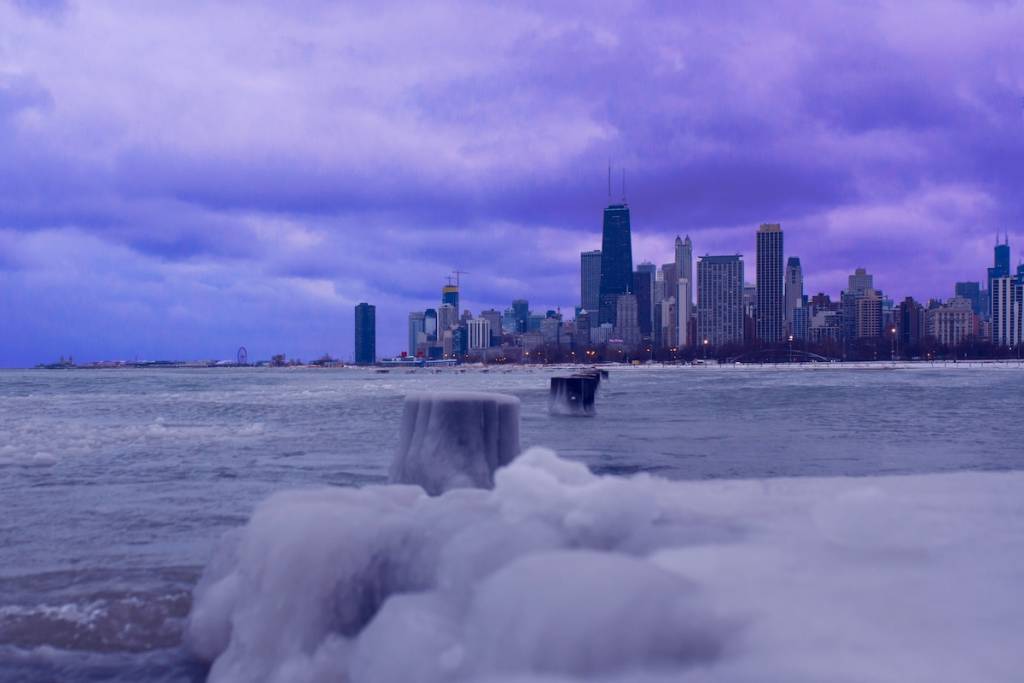

Winter temperatures in Chicago could be above average, according to the latest winter outlook from the National Oceanic and Atmospheric Administration (NOAA.)
NOAA released updated models and new information on November 12, favoring a strengthening El Niño pattern impacting North America during winter 2026-27.
Recommended Articles
 CTA will test new faregates at 10 rail stations starting in 2027: 136,000+ weekday rides went unpaid or underpaid in 2025, and here’s what riders will notice
 Here are the Christkindlmarket locations for 2026
According to the report, there is a greater than 79% chance that “a strong-to-very strong El Niño” will persist from January through March 2027.
What a strong-to-very-strong El Niño could mean for Chicago

NOAA’s predictions show Chicago has a 50-60% chance of experiencing above-average temperatures from December 2026 to February 2027.
For context, Chicago’s seasonal mean temperature from December–February is 28.1 degrees.
Precipitation predictions remain inconclusive, with NOAA’s Dec–Feb model showing equal chances of greater-than-average, near-average, or below-average total seasonal amounts.
An important distinction: this means NOAA can’t confirm one outcome, not necessarily that each outcome has an equal chance of occurring.
Chicago’s first very strong El Niño in more than a decade

The current weather system is the first very strong El Niño to occur since winter 2015-2016, according to NOAA.
That season, Chicago saw a lower-than-normal snowfall total of 31.2 inches, 7.2 inches less than the average total of 38.4 inches.
In summary, temperatures and snow totals could diverge from the average stats this winter in Chicago.
However, it’s best to keep in mind that our city’s winter baseline is relatively harsh. So a warmer-than-average winter in Chicago with potentially less snowfall doesn’t necessarily mean we’ll evade periods of intense cold or precipitation.
