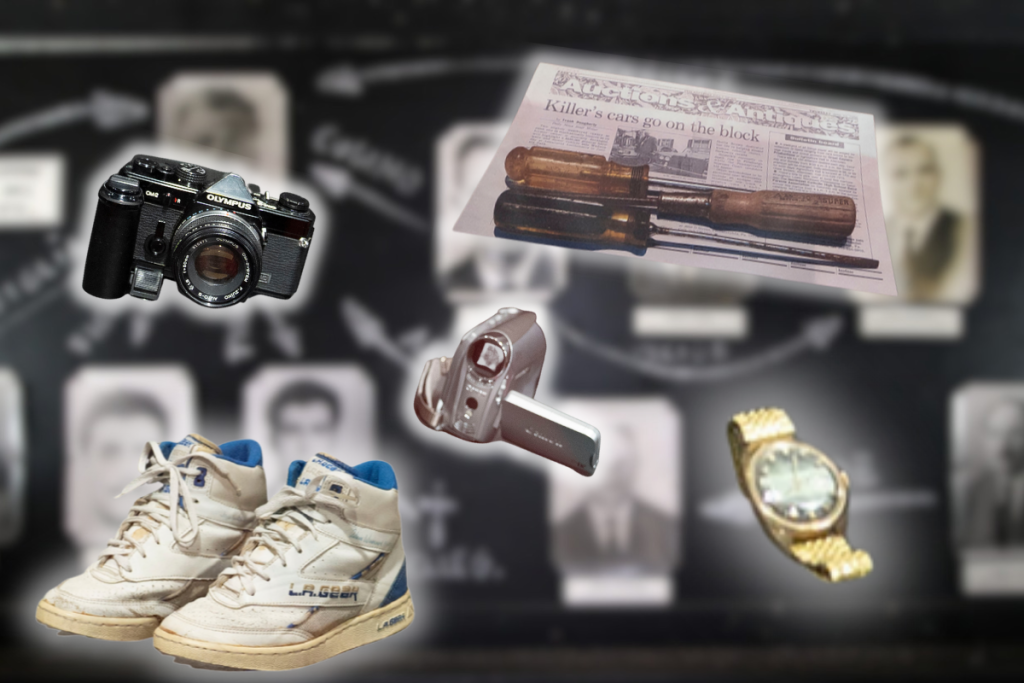

There’s a huge collection currently in Chicago with more than 2,100 authentic true crime artifacts belonging to 140 killers from around the world. Most items look completely normal on the surface, but their stories tell the terrible truth.
Guests walk out having learned more about how investigations really work than a dozen documentaries ever covered.
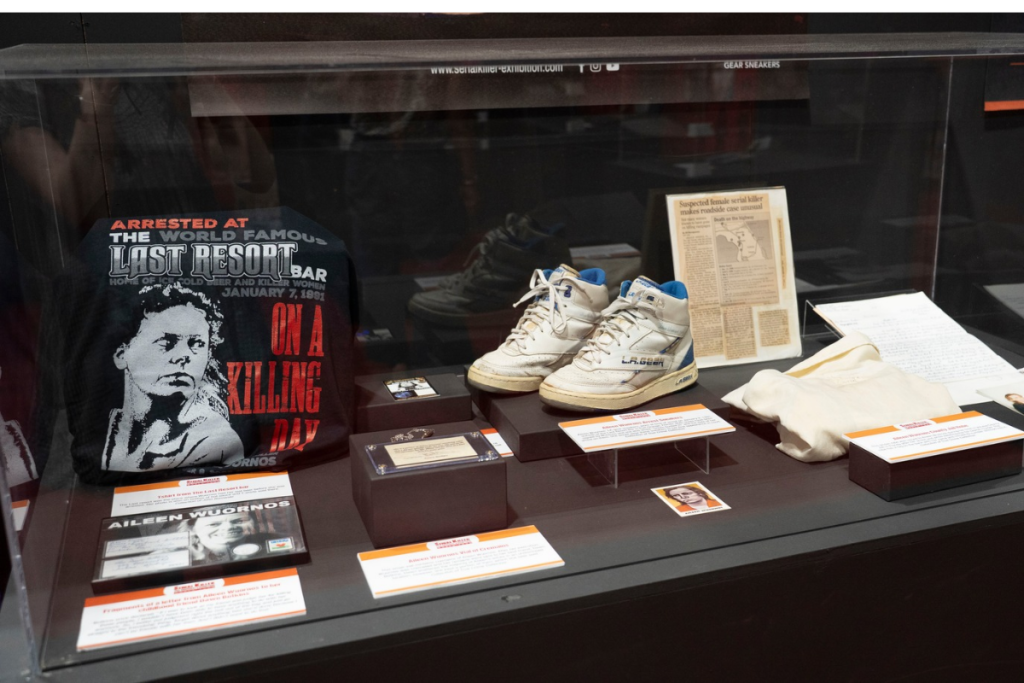
Aileen Wuornos’ L.A. gear sneakers
Plain white sneakers, the kind found in any closet in the early ’90s. These ones were on Aileen Wuornos‘ feet when she was arrested outside a biker bar in Port Orange, Florida, on January 9, 1991.
She wore them to her first court appearance, then signed them with her prison ID number and a note: “shoes busted in 1-9-91.” Then she mailed them to a friend. Not exactly what anyone expects to see behind glass.
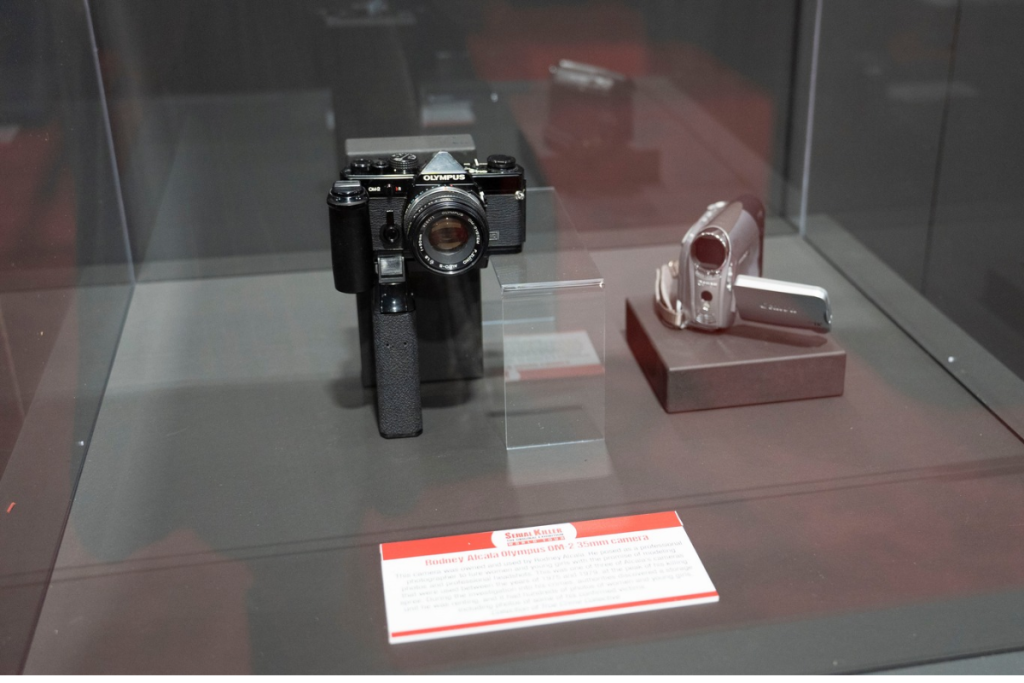
Rodney Alcala’s Olympus OM-2 camera
Here’s where an everyday hobby turns sinister. Between 1975 and 1979, Rodney Alcala used cameras like this one to deceive aspiring models, claiming to be a professional fashion photographer.
This particular camera was kept by his sister with undeveloped film, then sold to private collectors. It now belongs to the True Crime Collective, and according to the exhibit, it’s exclusive to the Chicago stop of the world tour. That’s the kind of detail that makes a visit feel time-sensitive.
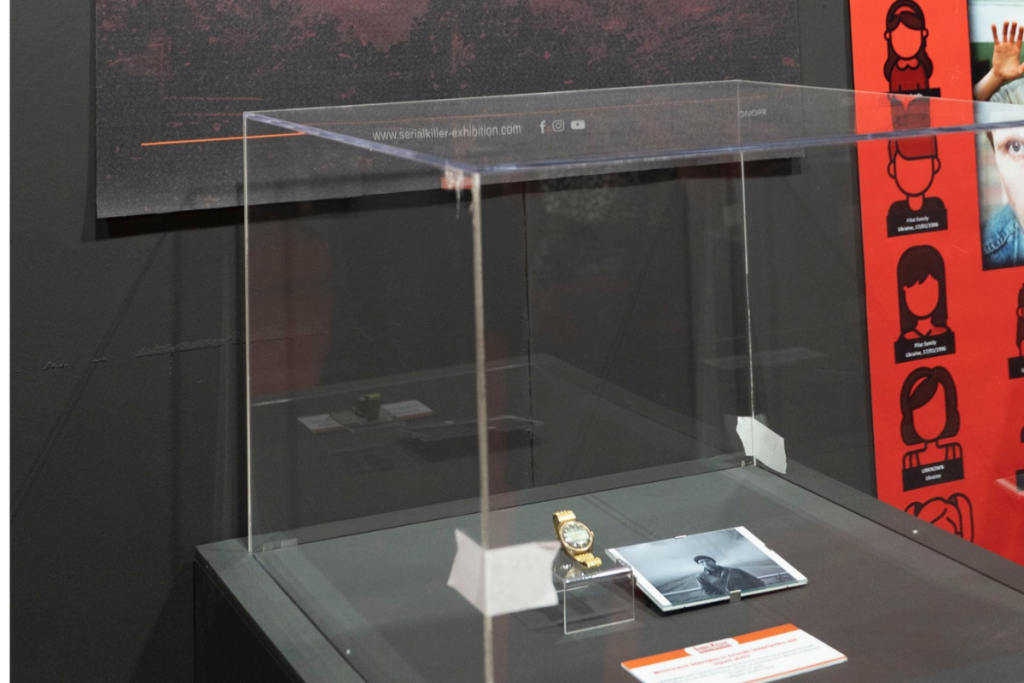
Anatoly Onoprienko’s wristwatch
This one is quietly chilling. Ukrainian killer Anatoly Onoprienko took “trophies” from victims, including watches and jewelry.
In 1989, a Russian journalist befriended him in Berlin with zero idea who he was. Onoprienko gave him an old Soviet women’s watch as a gift, and the journalist noticed a bag of similar ones. Only after the arrest did the pieces click. The journalist later donated the watch, along with a signed photo sent from prison, to the exhibition’s London edition.
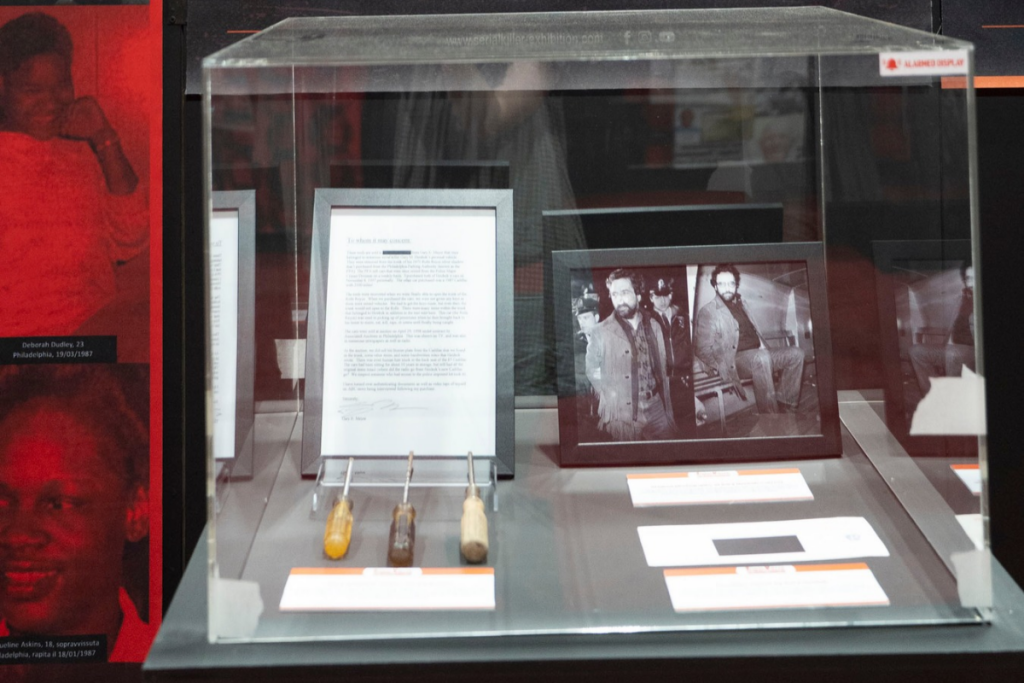
Gary Heidnik’s screwdrivers
These screwdrivers turned up hidden in the trunk of a car auctioned off in Philadelphia years after Gary Heidnik‘s arrest.
The buyer of the Rolls-Royce found them in a compartment, and they passed to a prominent collector before being acquired by the exhibit’s owners in 2025. The story comes from survivor testimony, which is part of why the exhibit’s approach matters: the focus stays on evidence and on the people affected.
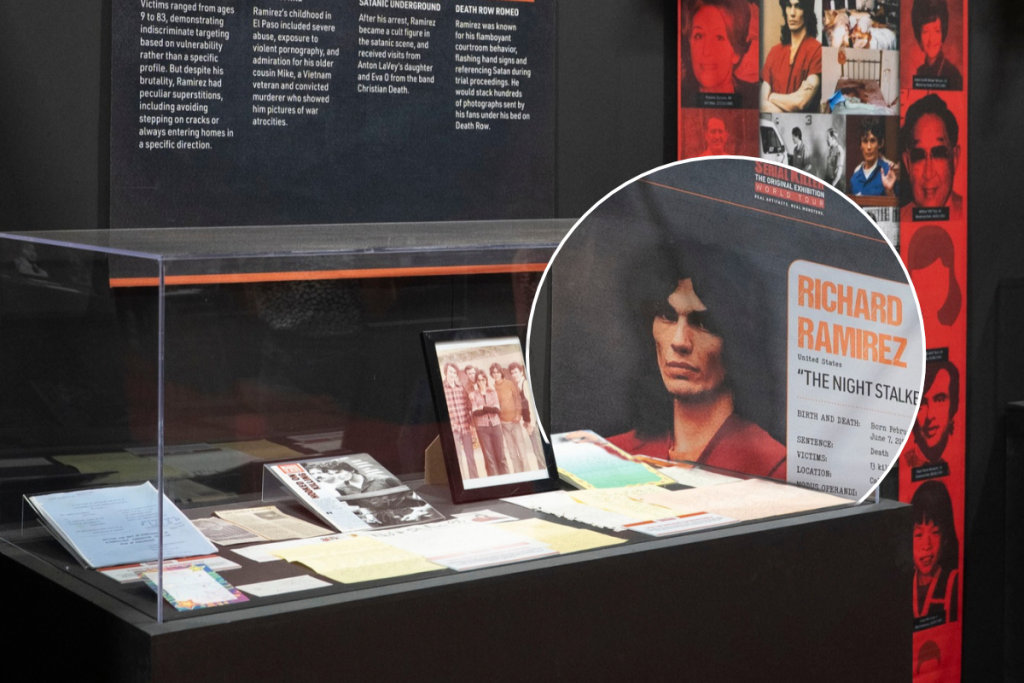
Richard Ramirez’s courtroom tie
The “Nightstalker” wore this tie during a L.A. trial that ran about 14 months and cost $1.8 million, then the most expensive murder trial in California history.
Then the tie kept traveling. It went from his wife, to an Indianapolis museum, to French killer Nicolas Claux, who wore it while working in a Paris hospital morgue. It became a permanent part of the exhibition in September 2023. Few objects pack that many strange chapters into a strip of fabric.
Curious to check them out for yourself? Check the full lineup and step into a vault full of the darkest true crime artifacts!